
Corrosion Sensors
Advanced corrosion sensors for real-time corrosion rate measurement in test chambers and service environments. Reliable, autonomous monitoring solutions for materials testing and asset protection.
Advanced corrosion sensors for precise material performance assessment
LabroTek provides state-of-the-art corrosion sensors that deliver accurate, real-time measurement of corrosion rates in both controlled test environments and field service conditions. Our comprehensive range of Acuity corrosion sensors enables continuous monitoring, automated data collection, and detailed analysis of material performance under corrosive conditions.

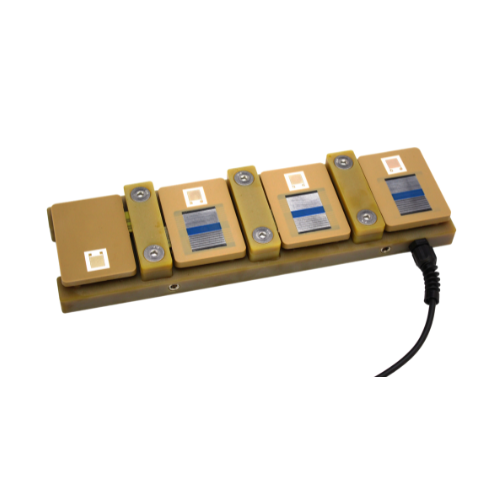
Comprehensive corrosion sensor solutions
Test chamber corrosion sensors
Real-time corrosion rate measurement during accelerated testing:
- ES Sensors: Precise assessment of materials performance in corrosion test chambers
- Continuous Data Logging: Automated recording of corrosion rates throughout test cycles
- Multiple Sample Monitoring: Simultaneous tracking of different materials or coatings
- Standards Compliance: Support for ASTM, ISO, and other international testing protocols
Autonomous field corrosion sensors
Continuous corrosion surveillance in service environments:
- LS Sensors: Long-term monitoring in operational environments and infrastructure
- CR Sensors: Versatile monitoring for both laboratory chambers and outdoor installations
- Wireless Connectivity: Remote data access and alarm notifications
- Battery-Powered Operation: Extended autonomous deployment without external power
Featured Corrosion sensors
Each corrosion sensor system is engineered to provide reliable, accurate corrosion rate data across diverse applications. From laboratory test chambers to remote field installations, our corrosion sensors deliver the performance and reliability demanded by materials scientists, quality control professionals, and maintenance engineers.
Why choose LabroTek?
Expert Consultation
Our specialists help you identify the ideal equipment for your specific applications and requirements
Installation & Training
Professional setup and comprehensive operator training to ensure optimal performance from day one
Lifetime Technical Support
Dedicated assistance throughout your equipment's service life, including troubleshooting and updates
Calibration & Maintenance
Regular service programs to maintain accuracy, compliance, and maximize operational uptime
Precision-engineered corrosion sensor technology
Our corrosion sensor systems represent industry-leading measurement technology, providing:
Real-Time Corrosion Rate Measurement
Continuous monitoring and instant detection of corrosion onset and progression
Autonomous Operation
Self-powered corrosion sensors with wireless connectivity for remote installations
Multi-Environment Capability
Suitable for laboratory chambers, outdoor exposure sites, and service environments
Comprehensive Data Recording
Automated logging, analysis, and reporting of corrosion behavior over time
Standards Compliance
Corrosion sensors designed to support ASTM, ISO, NACE, and other international testing standards
Applications Across Industries
- Materials Research & Development: Evaluating new materials and protective coatings with corrosion sensors under controlled conditions
- Quality Control Testing: Continuous monitoring during accelerated corrosion testing programs
- Infrastructure Monitoring: Long-term surveillance of bridges, pipelines, and structural steel
- Marine and Offshore: Monitoring corrosion in saltwater and coastal environments
- Chemical Processing: Tracking material degradation in process equipment and storage tanks
- Automotive Testing: Assessing corrosion performance during development and validation
- Aerospace Applications: Monitoring critical components in atmospheric exposure conditions
Frequently asked questions about corrosion sensors
What are corrosion sensors and how do they work?
Corrosion sensors are advanced monitoring devices that measure real-time corrosion rates by detecting changes in electrical resistance as metal corrodes. They provide continuous data on material degradation, enabling early detection of corrosion and accurate assessment of protective coating performance. The sensors can be deployed in test chambers for controlled experiments or in field environments for long-term infrastructure monitoring.
What is the difference between ES, LS, and CR corrosion sensors?
ES corrosion sensors are designed for laboratory use in corrosion test chambers, providing precise measurements during accelerated testing. LS sensors are engineered for long-term autonomous monitoring in service environments and field installations. CR sensors offer versatility for both laboratory chambers and outdoor exposure sites. Each sensor type is optimized for its specific application while maintaining the same high level of measurement accuracy.
How accurate are corrosion sensors?
Acuity corrosion sensors provide highly accurate measurements with resolution down to nanometer-scale metal loss detection. They can measure corrosion rates from less than 0.1 micrometers per year to several millimeters per year, making them suitable for both slow atmospheric corrosion and aggressive industrial environments. The continuous measurement capability eliminates the uncertainty associated with traditional weight-loss methods.
Can corrosion sensors be used for multiple materials?
Yes, corrosion sensors are available in various metal alloys to match your application requirements, including carbon steel, stainless steel, aluminum, copper, and zinc. Using corrosion sensors made from the same material as your test specimens or monitored assets ensures the most relevant and representative corrosion data for your specific application.
How long can autonomous corrosion sensors operate in the field?
Battery-powered autonomous corrosion sensors like the LS and CR models can operate continuously for several years depending on data logging frequency and environmental conditions. They feature low-power wireless connectivity for remote data access and can send alerts when predefined corrosion thresholds are reached, making them ideal for infrastructure monitoring and long-term exposure studies.
What data do corrosion sensors provide?
Corrosion sensors provide comprehensive data including instantaneous corrosion rate, cumulative metal loss, time-to-failure predictions, and corrosion behavior trends. The accompanying software enables data visualization, statistical analysis, and report generation. This information helps optimize protective coating formulations, validate accelerated test protocols, and plan maintenance schedules for infrastructure assets.
Can corrosion sensors be integrated with existing test chambers?
Yes, ES corrosion sensors are designed for easy integration with most standard corrosion test chambers including salt spray, cyclic corrosion, and humidity cabinets. They can be installed alongside traditional test specimens, providing real-time corrosion data to complement visual inspections and weight-loss measurements. LabroTek can assist with integration planning and corrosion sensor placement optimization.
What maintenance do corrosion sensors require?
Corrosion sensors require minimal maintenance. The sensing elements naturally corrode during use and should be replaced periodically depending on corrosion rates and test duration. For field-deployed corrosion sensors, periodic checks of battery status, wireless connectivity, and physical condition are recommended. LabroTek offers calibration verification services and replacement sensing elements to ensure continued measurement accuracy.